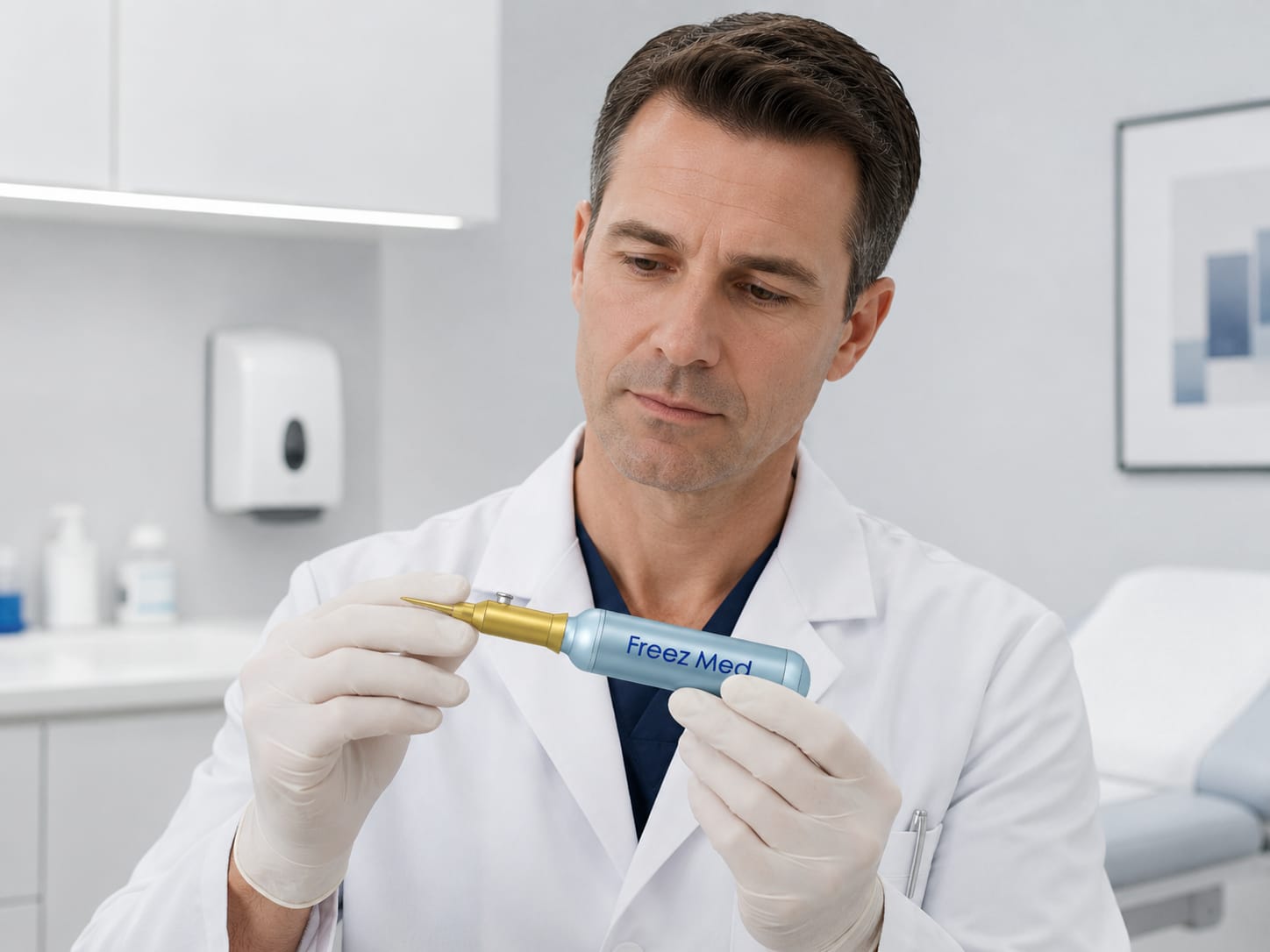
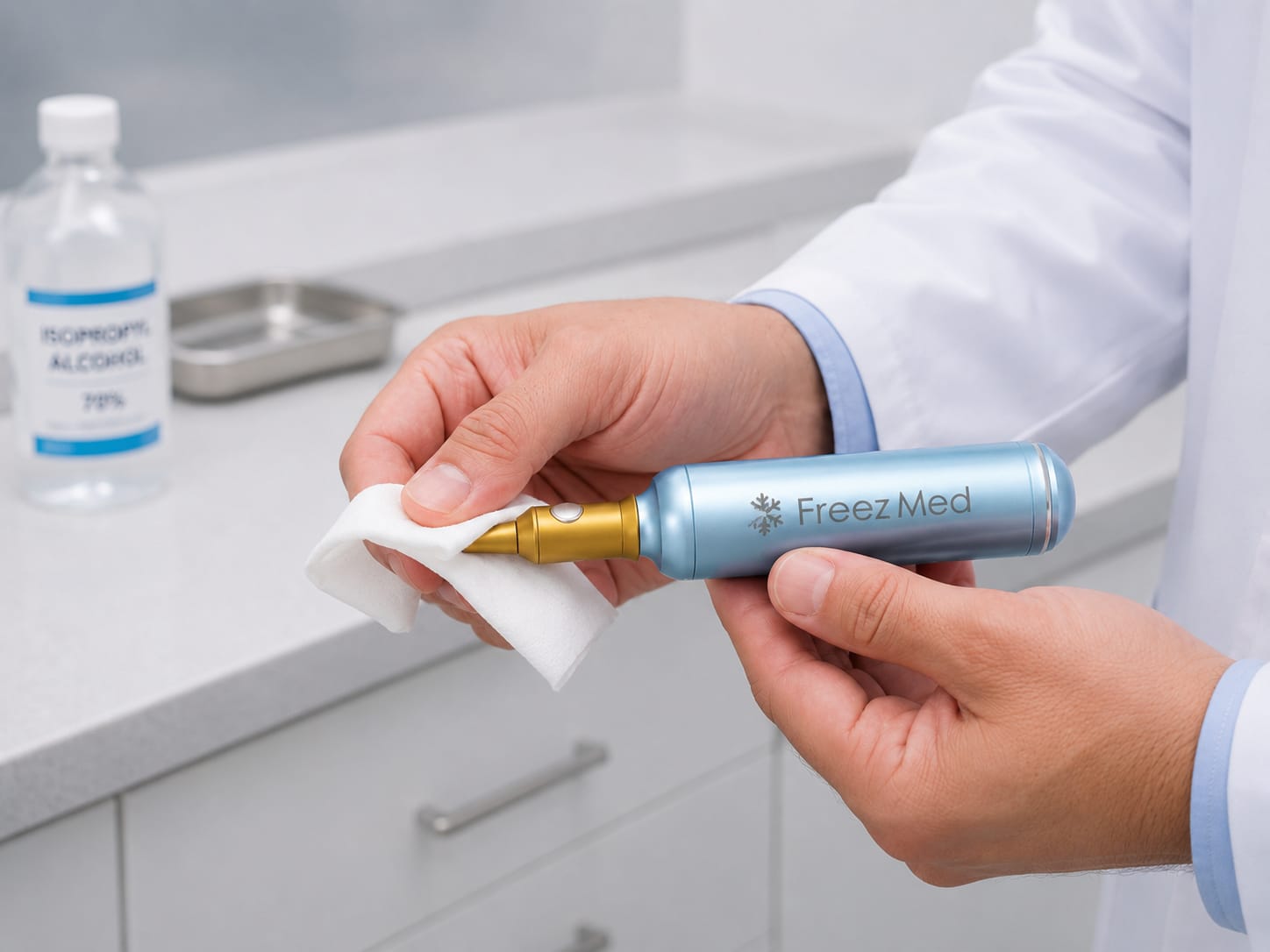
FreezMed is a handheld N₂O cryosurgery device built for dermatologists and trained clinical staff — precise, refillable, and designed for daily use in hospitals and clinics across Iran.

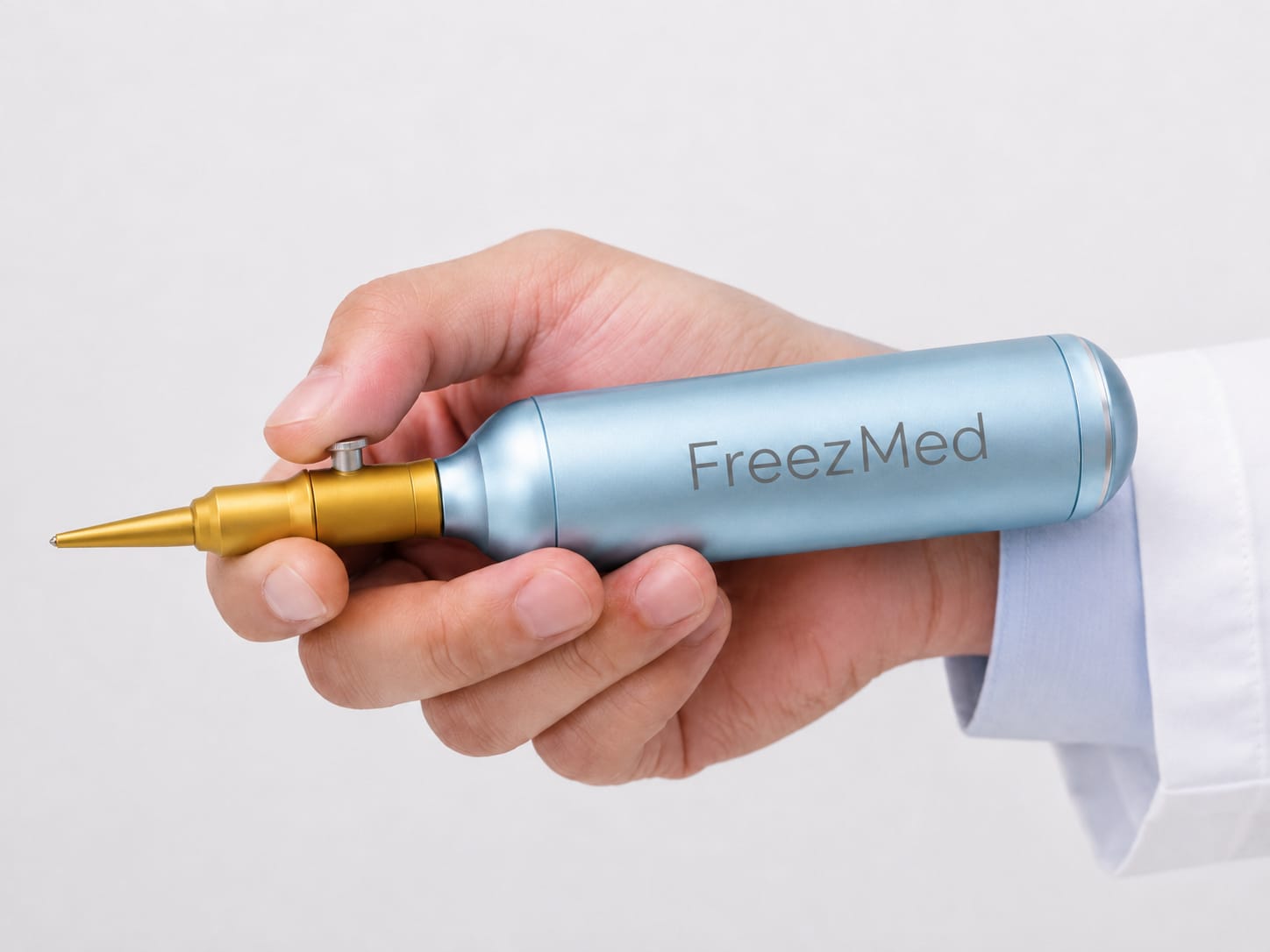
FreezMed pairs a durable mechanical handpiece with a refillable N₂O cartridge and interchangeable tips, so one device covers most in-office cryosurgery needs — from fine non-contact work to larger contact-tip lesions.
25 g cartridge, factory-refilled and pressure-checked under the FreezMed Returning Program — no single-use gas canisters to restock mid-week.
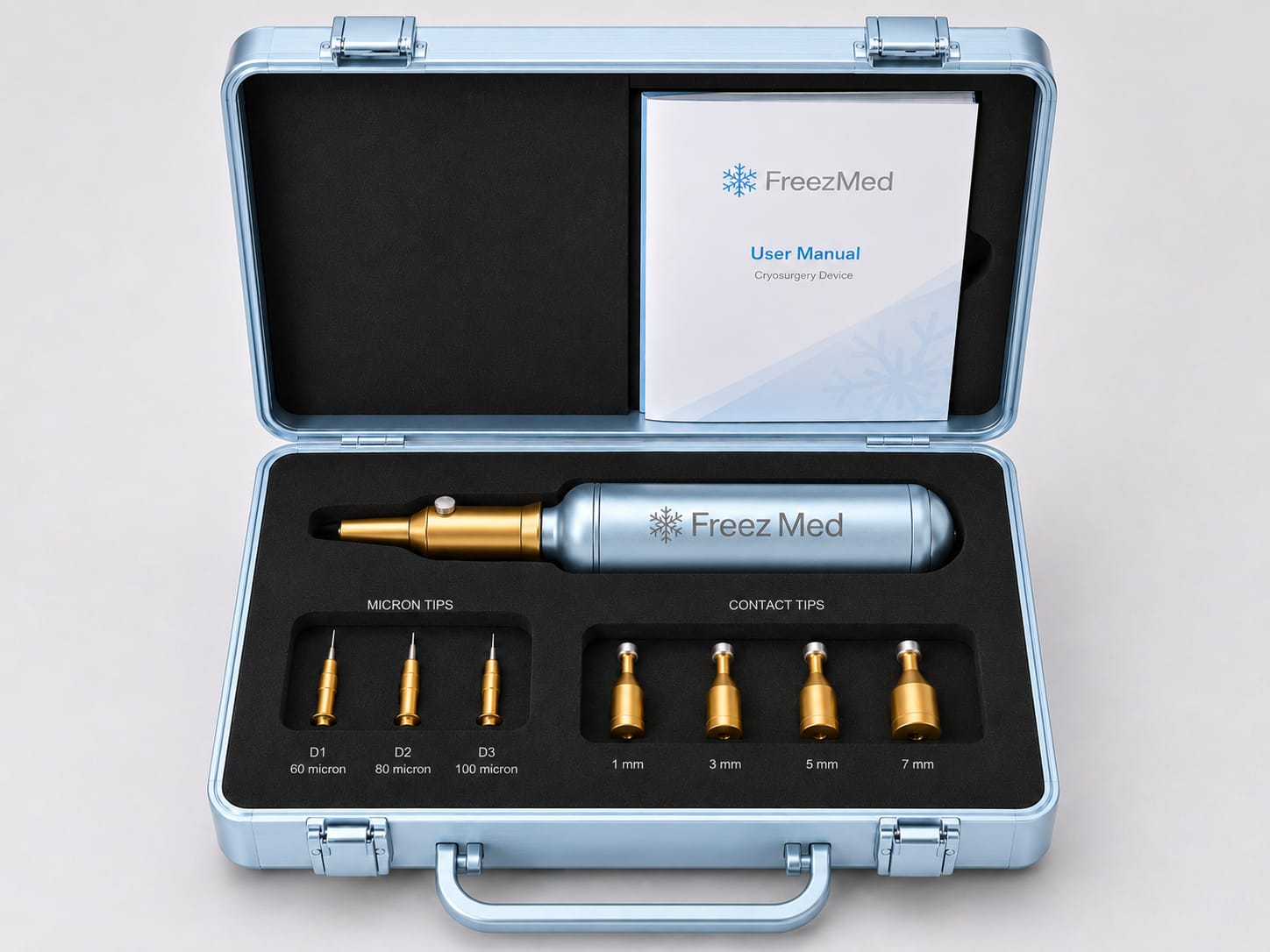
D1/D2/D3 non-contact micron tips plus 1, 3, 5, and 7 mm contact tips, selected by lesion type, size, and treatment area.
A single mechanical trigger delivers consistent gas flow only when pressed fully to the end stop — simple, repeatable control for the operator.


The FreezMed N₂O cartridge is refillable. When it runs low, your clinic sends it back through the official Returning Program and receives a pressure-checked, refilled cartridge in return — no in-clinic refilling, no downtime guesswork.
Contact FreezMed and we send the official Refill Program return box straight to your clinic.
Place the cartridge or device safely inside the official return package and seal it for shipment.
Post the package to our Tehran facility. We check pressure, refill with N₂O, inspect, and return it to you.


FreezMed is an Iranian medical device company designing and manufacturing a portable mechanical cryosurgery system for professional dermatological use. Our device is intended exclusively for doctors, dermatologists, and trained clinical staff treating benign superficial skin lesions such as warts, skin tags, cherry angiomas, milia, and seborrheic keratoses.
Every device ships in a protective case with the handpiece, a refillable cartridge, and a full set of contact and micron tips — supported by a factory Returning Program for cartridge refill, inspection, and service.

FreezMed’s technical file, instructions for use, and quality processes are being developed in line with ISO 13485 (quality management), ISO 14971 (risk management), and IEC 62366-1 (usability engineering), in preparation for review by Iran’s medical device authority and international certification bodies.